
Meet the Maker: Taku Takenouchi, Founder of Sousougama Japanese Ceramics
|
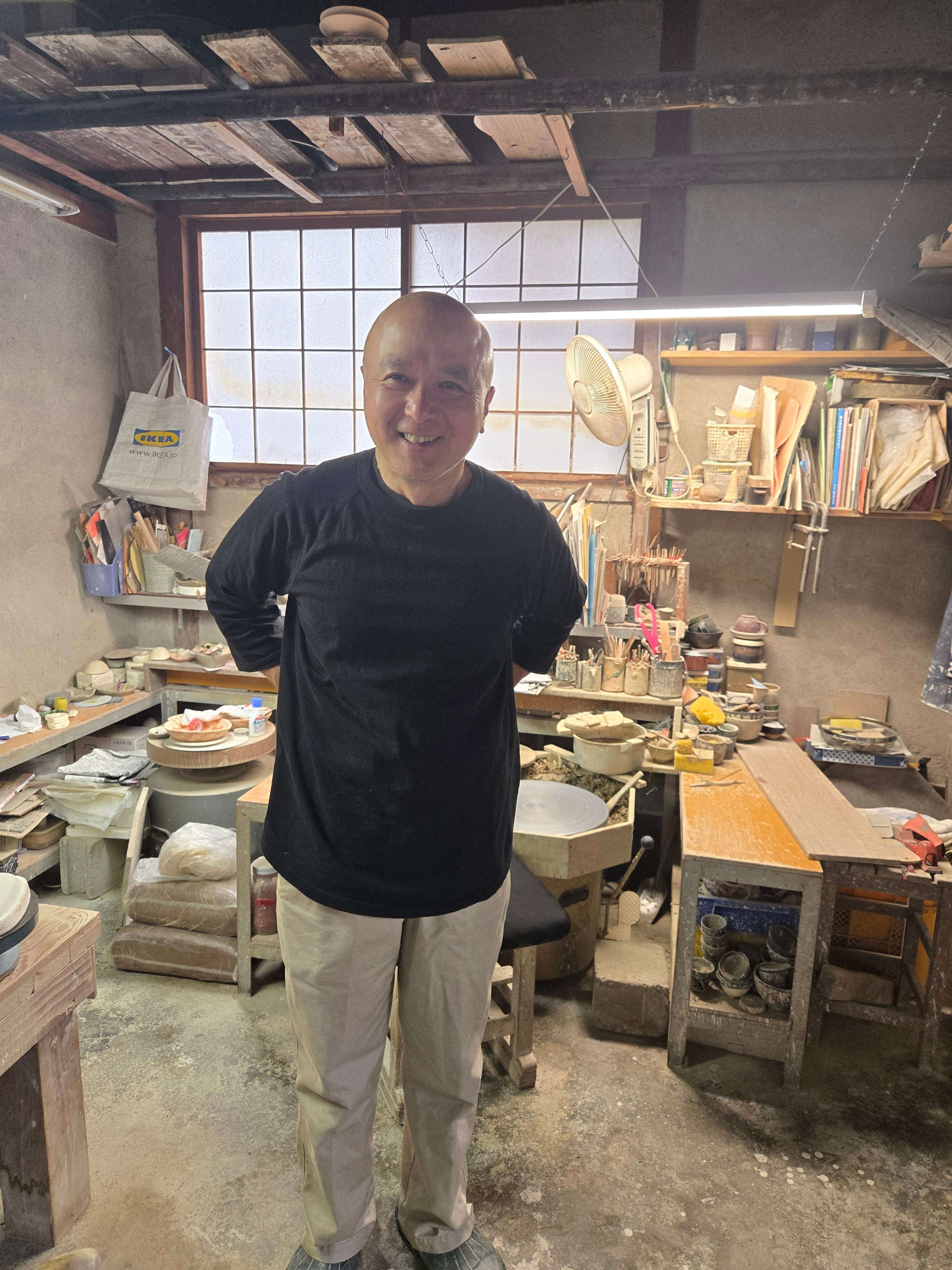
Recently deceased, Taku’s father was the beginning of Taku’s journey into the world of ceramics. Founded in 1967, his father named the workshop Sousougama, which comes from “宋” (Sō) from China’s Song Dynasty — a golden era for ceramics — and “艸” (Sō), symbolising the desire to take root and grow. Taku’s studies and expertise were originally in metal casting, but rather than remaining in a factory environment and industry, as he grew older he found himself observing the incredible craftsmanship and skill behind his father’s ceramics, for which he was very renowned. Eventually, a new path came to Taku shifting his career into the world of ceramics himself. His desire was to be involved in the entire process of creating something from start to finish, with endless possibilities to be creative. His workshop speaks of a beautiful balance between structure and freedom. Perhaps his success comes from his ability to embrace the need to create what people want and need, while never forgetting to make pieces born purely from his own passion. The workshop itself is well organised, with everything within arm’s reach. Not at all hesitant to show any part of it, he says to me, “Please come in, there’s no secrets to hide.” Such humbling and welcoming words that speak of the quiet confidence of a true professional. Great-looking kilns stand proudly for the different stages of the process, alongside fascinating machines and equipment used for the finer detailing of his products. This is where the long hours are spent. Each stage requires precise timing, measured not by numbers alone, but by experience - knowing exactly when each step should take place. Though it is a completely different industry to mine -roasting coffee in a drum with nothing but heat - I could deeply relate when he spoke about timing, heat transitions, humidity, and seasonality. It is a language only understood by those within these kinds of crafts, because timing cannot always be measured. It is something felt. Felt only by those who have experienced all the wrong timings in between, and seen the difference the most subtle changes can make. Years and layers of underrated labour. The outcome of his work expresses strength, durability, confidence - but also playfulness. Compared to his father’s work, Taku’s creations are vibrant yet elegant, fun yet incredibly well considered.
The other uniqueness that charms this place is the beautiful embroidery Mayumi presents alongside her husband’s work, complementing each other’s skills and creations so naturally.
Mayumi’s embroidery is a traditional craft originating from Aomori, a prefecture in the north of Japan, dating back to the Edo period (1600–1868), when farmers reinforced hemp garments with cotton stitching to stay warm - eventually evolving into a decorative technique. Kogin sashiko is known for its geometric patterns such as Mameko (beans), Uma no Kutsuwa (horse bit), and Hanako (flowers). Using a counted-thread method, Mayumi stitches each piece with incredible precision, creating functional items that highlight the quiet beauty and symmetry of sashiko. Every piece is hand sewn. It really is so sweet and charming - true labour of love.
The shop itself was beautifully curated, with Taku’s pottery and Mayumi’s embroidery complementing one another effortlessly, almost like a representation of their love and support for each other.
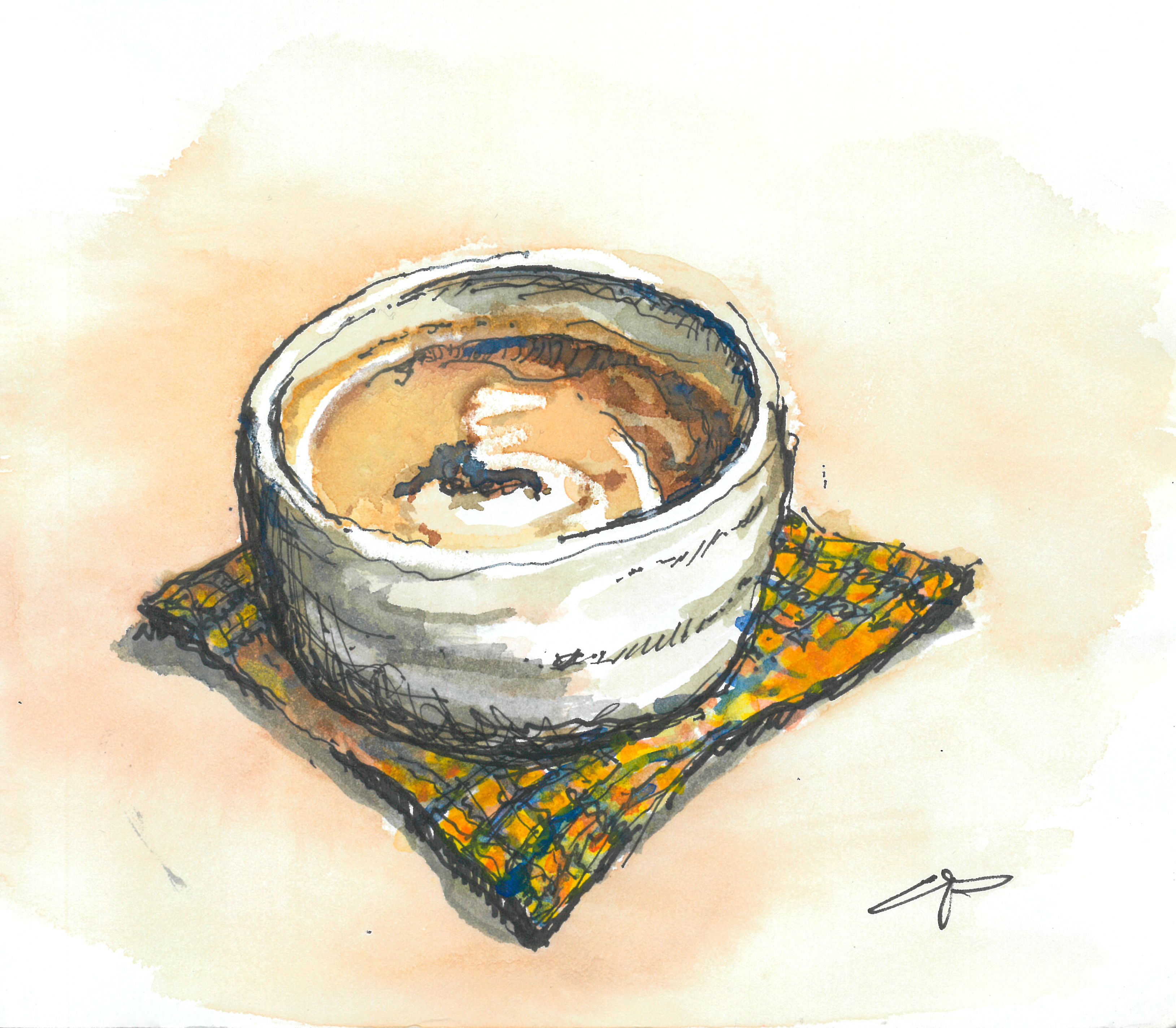
His pieces are designed for everyday use, in everyday settings and they should be, because they are so well made. Solid enough to handle the wear of daily life, yet carrying the presence of something truly special. When you serve, drink from, or present anything in one of his pieces, you experience the depth and beauty of a true ceramist - someone who knows his clay, his kiln, his heat, and everything in between.
Bonus shot: Taku's handmade pizza oven!! so awesome.
|